Introducing LibraryLink: Helping Libraries generate revenue from their deaccessioned materials.

Introducing LibraryLink: Helping Libraries generate revenue from their deaccessioned materials.
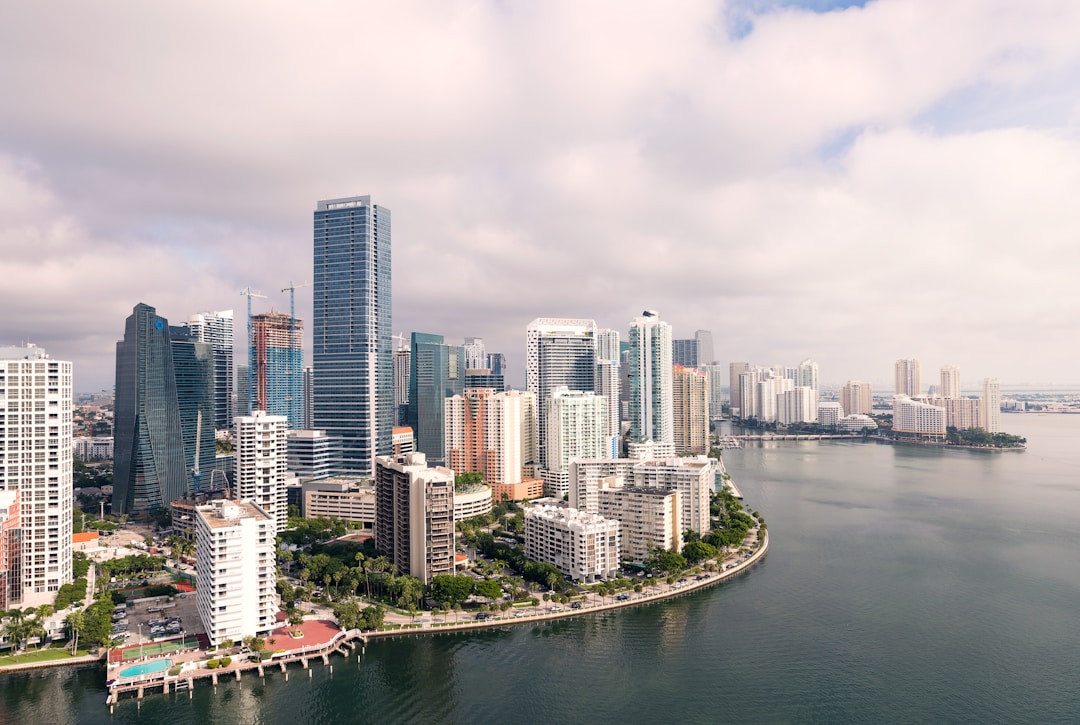
Miami High-Volume Book Donations

From university move-outs in Coral Gables to snowbird estate clearouts across Coconut Grove and Miami Beach, Miami generates substantial book donations with a clear seasonal rhythm. We coordinate free pickup for collections of 30 or more boxes across Brickell, Wynwood, and all of Greater Miami.
Serving Coral Gables, Brickell, Coconut Grove & Greater Miami
We specialize in free bulk book donation pickup for universities, schools, nonprofits, and businesses throughout Greater Miami and South Florida.
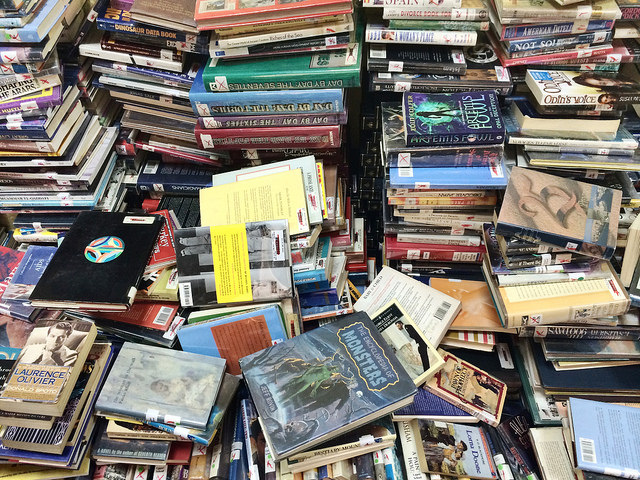
Miami's donation calendar runs on two rhythms: the winter snowbird season, when seasonal residents from Canada, New York, and New England arrive and begin downsizing, and the summer academic window, when universities like UM and FIU wrap up semesters and campus collections move out. Our book donation pickup services are built around both — coordinating scheduled pickups for collections of 30 or more boxes before Florida's summer humidity sets in and damages what's left in storage.
The busiest donation months in Miami are January through March, when snowbird residents downsize or settle estates across Coral Gables, Coconut Grove, and Pinecrest. May and August bring a second surge from university move-outs at the University of Miami, FIU, and Miami Dade College. For any of these peak windows, 2–3 weeks of advance notice gives you the best scheduling options.
We coordinate pickups across all of Miami-Dade County: Coral Gables (University of Miami, Miracle Mile), Brickell, Wynwood, Coconut Grove, Little Havana, Miami Beach, Hialeah, Kendall, and surrounding South Florida communities. Whether you are managing a condo estate, a university move-out, or a nonprofit storage cleanout, we handle the logistics so books move on schedule.
We build Miami pickup schedules around the two donation surges that define the city's calendar: snowbird estate clearouts during winter months (January–March) and university move-outs at UM, FIU, Miami Dade College, and Barry University in May and August. Collections of 30 or more boxes have priority scheduling across both windows.
Every Miami collection is sorted for maximum reuse before recycling is considered. Miami-Dade literacy nonprofits, Florida literacy programs, and bilingual educational institutions receive priority placement for relevant books. What cannot be placed goes to responsible recycling with clear volume reporting for Miami-Dade foundations and Florida state grant applications.
Miami's trilingual character and its concentrated snowbird season — with seasonal residents arriving in October and leaving by April — create a donation surge that is too large and too time-compressed for self-managed drives to handle well.
| Factor | Self-Managed Drives | Professional Pickup Service |
|---|---|---|
| Pickup logistics & transportation | Staff coordinate vehicles, storage, and donor handoffs without dedicated routes. During snowbird season, this becomes especially strained as the January–March surge arrives all at once. | We handle all scheduling, routing, and transportation for collections of 30 or more boxes across Greater Miami. Predictable pickup cadence during the January–March snowbird peak and the May and August university windows. |
| Storage & donation overflow | Storage fills quickly during snowbird season, and books left in South Florida storage through summer face real humidity and mold risk. Backlogs compound quickly. | Regular large-volume pickups across Coral Gables, Brickell, and Miami keep donation sites operational year-round and get books out of Florida storage before the humid summer season. |
| Donation outcomes & accountability | Limited visibility into where books go after the drive ends. Difficult to document community impact for bilingual nonprofit funders or Miami-Dade foundations. | Detailed impact reports include language-distribution breakdowns — critical for bilingual nonprofit funders in Miami-Dade — showing what went to Spanish-language community organizations, Haitian Creole community centers, and English-language literacy programs. Community partners include Miami-Dade Public Library System and organizations connected to Miami Book Fair. <a href="https://zoombooks.ca/sustainability/">More on our sustainability approach.</a> |
What to know before arranging a bulk book donation pickup in Miami or South Florida.
Miami's largest donation sources reflect the city's distinctive demographics and geography. The most significant are snowbird estate clearouts — January through March, when seasonal residents from Canada, New York, and New England downsize or settle estates in Coral Gables, Coconut Grove, and Pinecrest. University move-outs at the University of Miami, FIU, Miami Dade College, and Barry University generate academic collections in May and August. Nonprofit storage cleanups in Little Havana, Wynwood, Brickell, and Hialeah, along with corporate office relocations in the Brickell Financial District, add year-round volume.
For organizations managing 30 or more boxes, individual drop-off is rarely workable. We specialize in bulk book donation pickup for exactly these situations — high-volume collections that require coordination and climate-aware logistics. If you are managing a library weeding or deaccession project, our book weeding services and library deaccession services may also be relevant.
Common donation sources across Greater Miami:
Miami's book donation challenge has two dimensions, and both require professional handling.
The first is language. Miami's trilingual character means every collection needs to be evaluated and routed by language community before anything else happens. Spanish-language books — fiction, children's titles, educational materials — belong in Miami's Latin American community organizations serving Cuban, Colombian, Venezuelan, Nicaraguan, and other communities, where demand consistently outpaces supply from standard donation channels. Haitian Creole books belong in Little Haiti's community centers and churches. A self-managed drive typically treats all books as interchangeable. Professional sorting identifies linguistic value at the point of collection, not after the fact.
The second is timing. Miami's snowbird season creates a concentrated surge from October through March — too large and too short in duration for self-managed drives to absorb. If books from Brickell condos, Coconut Grove estates, and Miami Beach high-rises are not coordinated quickly, they end up sitting in South Florida storage through the summer, where the subtropical humidity does its damage.
What professional pickup addresses in Miami:
For smaller collections under 30 boxes, Miami-Dade Public Library branches and Books & Books donation programs are good alternatives.
Miami-donated books serve a uniquely diverse community — one where language routing matters as much as condition grading. Spanish-language books go to community organizations serving Miami's Cuban, Colombian, Venezuelan, Nicaraguan, and other Latin American communities, where demand for Spanish books regularly exceeds what standard donation channels can supply. Haitian Creole books serve Little Haiti's community centers and Haitian churches throughout Miami-Dade County. FIU business and law texts and UM medical and marine biology texts serve strong academic resale channels.
Miami's independent literary culture — anchored by Miami Book Fair (the largest book fair in the US) and Books & Books in Coral Gables — creates community connections for high-quality literary donations that go beyond standard resale. Condition reporting matters more in Miami than in most cities: Florida's subtropical climate means humidity damage is genuinely common in donated books, and transparent condition data shapes routing decisions from the moment of assessment.
Typical outcomes for Miami donations:
Impact reports include trilingual distribution breakdowns — the specific metrics that matter when Miami-Dade nonprofit funders and bilingual literacy program sponsors need to demonstrate community reach. Read more about how our process works from collection through reporting.
For smaller collections under 30 boxes, or for donors who prefer drop-off, Miami has several options:
Miami-Dade Public Library: The county library system accepts books in good condition at select branches. Friends of the Library hosts regular sales to support literacy programs. A solid fit for individual donors with small collections who want to support local literacy directly.
Books & Books: Independent bookstore with locations in Coral Gables and Miami Beach. Accepts select donations and hosts literary events. A natural fit for rare books and literary collections.
Goodwill South Florida: Accepts book donations at multiple locations across South Florida. Convenient for small, ongoing donations mixed with household items.
When professional bulk pickup makes more sense (30+ boxes):
We serve other major Southeast cities as well and connect to our national donation network — including Atlanta, Washington DC, and Houston.
Minimum Requirements Checklist
Ensure your collection meets our requirements for efficient, sustainable bulk donation processing
Bulk donations must consist of at least 30 properly packed boxes to qualify for our free pickup service.
Books should be boxed and arranged on pallets for efficient loading and warehouse processing.
Provide loading dock or ground-level access with clear instructions for our pickup team.
Book pickups 2-3 weeks ahead, especially during peak seasons (May, August, December).
Let us know where your books are stored in Miami, roughly how many boxes you have (the minimum for free pickup is 30), and any relevant move-out, estate settlement, or campaign dates. We will plan an efficient pickup for your location — whether you are in Coral Gables, Brickell, or anywhere across Miami-Dade.
Miami pickups are built around two seasonal rhythms: the snowbird October–March surge, when seasonal residents from Canada and the Northeast are actively downsizing, and the pre-hurricane-season prep window in May–June, when Miami residents clear garages and storage before storm season. Schedule early in the snowbird season rather than waiting until April, when the late-season rush makes availability tighter. Collections of 30 or more boxes move reliably with 2–3 weeks of advance notice. Schedule your pickup here.
Miami collections start with language identification — English, Spanish, Haitian Creole, and Portuguese books are separated before any condition grading begins. Condition assessment accounts for Florida humidity: books from garages and non-climate-controlled storage are evaluated for moisture damage before routing decisions are made. Spanish books go to Latin American community organizations; Haitian Creole books go to Little Haiti community centers and churches; academic texts from FIU and UM go to academic resale channels; general English collections follow standard resale and literacy program routes.
Impact reports for Miami donations include a trilingual distribution breakdown — showing exactly what went to Spanish-language community organizations, Haitian Creole community partners, and English-language literacy programs — along with condition data showing what percentage of Florida-stored books remained in resaleable condition. These reports are particularly valuable for Miami-Dade bilingual nonprofit funders who need to document community-specific distribution to their own grant stakeholders.
For large collections of 30 or more boxes, we provide free pickup across Greater Miami, Coral Gables, Brickell, Coconut Grove, and South Florida. For smaller personal donations, Miami-Dade Public Library branches, Books & Books in Coral Gables or Miami Beach, or Goodwill South Florida locations are all practical options.
Yes. We provide free pickup for Miami book donations when a collection reaches the 30-box minimum. This applies to snowbird estate collections, university move-outs, nonprofit cleanouts, and corporate relocations across all Miami-Dade neighborhoods.
Spanish-language books — fiction, children's titles, educational materials, and religious texts — are in extremely high demand across Miami's Cuban, Colombian, Venezuelan, and Central American communities. If you have Spanish-language books, please do not discard them before reaching out. Haitian Creole books are also specifically sought by Little Haiti community centers and Haitian churches throughout Miami-Dade. FIU business and law texts and UM medical and marine biology texts have strong academic resale value. Books connected to Miami Book Fair and high-quality literary titles also have community program connections in Coral Gables and Miami Beach.
The busiest donation periods are January–March (snowbird season), May, and August (university move-outs). Plan to schedule 2–3 weeks in advance during these months. The winter window is the highest-volume period overall, driven by estate settlements and seasonal resident downsizing.
Yes. We coordinate university move-out pickups and bulk academic donations for collections that reach the 30-box minimum across all Miami-area campuses, including University of Miami, FIU, Miami Dade College, and Barry University.
High-rise buildings in Brickell, Coconut Grove, and Miami Beach require freight elevator coordination — you may need to book a freight elevator time slot in advance, especially during the busy January–March snowbird window. Suburban homes and storage units in Hialeah, Kendall, and Homestead have standard residential access. For Haitian community donations from homes in Little Haiti and Opa-locka, standard residential pickup applies. Let us know your building type and any freight elevator details when you reach out so we can plan accordingly.
Florida's subtropical humidity is the biggest threat to donated book condition. If your books have been stored in a garage, storage unit, or any non-air-conditioned space, move them to climate control as soon as possible — mold can begin in 24 to 48 hours in South Florida humidity. Check for fuzzy growth on page edges or a musty smell before boxing. If mold is present, contact us before pickup so we can assess whether the books can still be routed or whether recycling is the better outcome. Sorting Spanish-language books separately, if you are able, speeds up community routing significantly. Pack in sturdy banker boxes, share freight elevator details for high-rise pickups, and disclose any prior flood or water exposure when you schedule.
Miami donations reflect the city's bilingual and trilingual character. Roughly 40–50% go to resale through English and Spanish academic and online channels, with strong demand for UM, FIU, and Miami-Dade College texts. About 30–35% go to Florida literacy programs and Miami-based Latin American literacy nonprofits. The remaining 15–25% go to responsible recycling for humidity-damaged or outdated materials. You receive impact reporting formatted for Miami-Dade County foundations, Florida state literacy grants, and corporate community investment documentation.
Miami-Dade Library and Books & Books are excellent for small personal donations. We focus on bulk institutional pickups — 30 or more boxes — with coordinated logistics, language-aware sorting, climate-appropriate handling, and impact reporting. That combination makes us the right fit for universities, snowbird estates, corporate offices, and large nonprofits managing high volumes.

Tell us your donation size, your location in Miami — Coral Gables, Brickell, Coconut Grove, or anywhere in South Florida — and your timeline. We will coordinate pickup, sorting, and community distribution, and send you a full impact report when we are done.
Related Resources
Learn how our LibraryLink program supports deaccessioning, pickups, and revenue for libraries.
Learn MoreDiscover our responsible book recycling process and how we keep books out of landfills.
Learn MoreSee how we help thrift stores manage surplus inventory with pickups and resale support.
Learn More