Introducing LibraryLink: Helping Libraries generate revenue from their deaccessioned materials.

Introducing LibraryLink: Helping Libraries generate revenue from their deaccessioned materials.
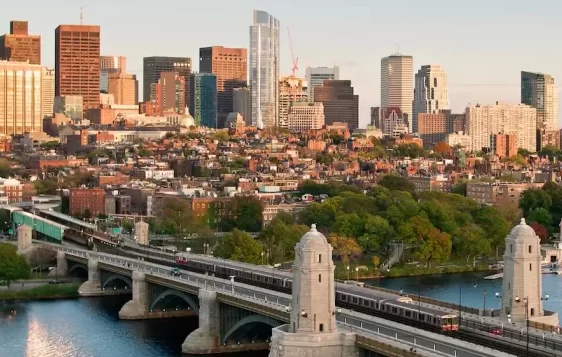
Boston Bulk Book Donation Pickup

Greater Boston is home to more than 55 colleges and universities — and when semester move-out week arrives, they all clear out in roughly the same three-week window. We offer free book donation pickup across Boston, Cambridge, Somerville, and the surrounding metro for collections of 30 or more boxes, with professional sorting and transparent outcome reporting.
Serving Cambridge, Somerville, Brookline & Greater Boston
We handle large-volume book donations for universities, nonprofits, and businesses across Greater Boston — with free pickup for qualifying collections.
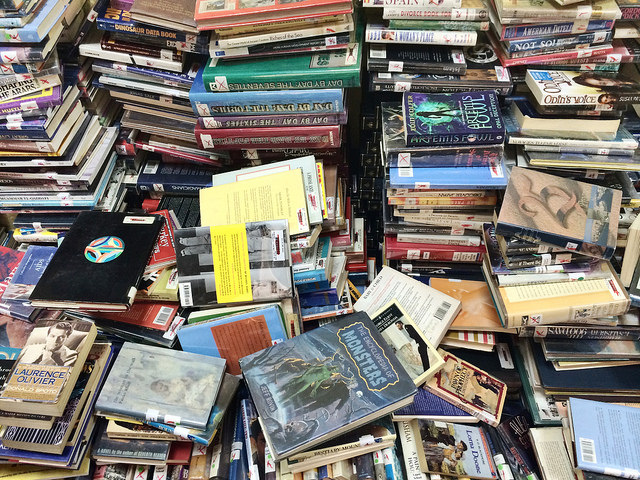
Boston's density of academic institutions — Harvard, MIT, Boston University, Northeastern, Tufts, BC, Simmons, and dozens more — means book donations here tend to be high in volume and high in quality. Research texts, academic journals, and specialized titles make up a larger share of the donation stream here than in most cities, and routing them correctly to academic resale channels or Massachusetts literacy nonprofits requires experience with the material.
The busiest periods are May and August, when Boston's 55+ universities move out in a compressed window. December adds another surge around holiday decluttering. January is also notably active — the post-holiday rush overlaps with the semester changeover, making it one of the single busiest pickup periods of the year. For May, August, and January pickups, booking at least two to three weeks ahead is advisable.
We coordinate pickups across Boston and the surrounding metro — Cambridge (Harvard Square, Central Square, Kendall Square), Somerville (Davis Square, Union Square), Brookline, Allston-Brighton, and university campuses throughout the area. If your books are in Greater Boston, we can reach them.
When Harvard, MIT, BU, Northeastern, and Tufts all move out in the same two-to-three-week stretch, logistics become the constraint. We plan pickup routes specifically around this compressed window — with advance scheduling critical for May and August. Collections of 30 or more boxes qualify for free coordinated pickup.
Boston donors are characteristically thorough about where their books end up. Our reporting shows the full distribution — resale, Massachusetts literacy program placements, and responsible paper recycling — with enough detail to satisfy institutional grant funders, university sustainability requirements, and accountability-minded individual donors alike.
No US city compresses more academic book donation volume into a shorter window than Boston. When Harvard, MIT, BU, Northeastern, Tufts, BC, Simmons, and dozens of other institutions all move out within the same three weeks, professional coordination is the only way to keep pace with the volume.
| Factor | Self-Managed Drives | Professional Pickup Service |
|---|---|---|
| Pickup logistics & transportation | Staff coordinate vehicles, storage, and donor handoffs without dedicated routes. During Boston's compressed May or August move-out window, informal drives quickly run out of capacity. | We handle scheduling, routing, and transport for collections of 30+ boxes at no cost to the donor. Pickups are planned around Boston's university calendar so the compressed move-out window doesn't create a backlog. |
| Storage & donation overflow | Storage fills fast when five major universities clear out simultaneously. Sites are forced to turn away books during the peak weeks when donations are most available. | Regular large-volume pickups across Cambridge, Somerville, and Boston keep storage clear and keep donation sites running throughout the year — including during the peak academic clearance periods. |
| Donation outcomes & accountability | Limited visibility into where books end up after a drive closes. Impact data for grant reporting or institutional disclosure is difficult to produce. | Transparent outcome reporting with the granularity Boston donors expect — volume, resale rates, literacy program placements, and recycling totals. See our <a href="https://zoombooks.ca/sustainability/">sustainability practices</a> for more detail. |
How bulk pickup works, where Boston donations come from, and what happens to your books after they leave.
Boston's academic institutions are by far the largest source of donated books in the metro. Campus move-outs at Harvard, MIT, Boston University, Northeastern, and Tufts drive the two annual peaks in May and August. Estate clearouts in Brookline, Newton, and Cambridge — often from estates with substantial personal libraries accumulated over decades — generate consistent year-round volume. Nonprofit storage cleanups in Cambridge, Somerville, Allston, Dorchester, and Roxbury add to the mix, as do periodic corporate office relocations in the Back Bay and Seaport districts.
What makes Boston distinctive is the quality and character of the academic material. Research texts from Harvard Medical School, MIT's engineering departments, and BU's law and business programs require different routing than general fiction — they carry real resale value through academic channels and benefit from sorting expertise that a casual drop-off program won't apply.
Common sources of large Boston book donations:
The compression of Boston's academic calendar is unlike anything in other US cities. Harvard, MIT, BU, Northeastern, Tufts, BC, and dozens of smaller institutions all clear out in roughly the same two-to-three-week window in May and again in August. The volume that flows into the donation stream during those weeks is enormous — and self-managed drives simply don't have the vehicle capacity, storage space, or route coordination to handle simultaneous clearances across the metro.
Beyond logistics, Boston's academic book donations require sorting expertise that matters for impact. A Harvard Medical School text and a used thriller novel need different destinations. Getting that routing right — academic resale channels for specialized texts, Massachusetts literacy nonprofits for general reading, responsible recycling for what can't be reused — is where the difference between professional pickup and a casual drive becomes concrete.
What professional large-volume pickup provides:
Read more about how our process works from pickup through final distribution.
Boston donors — shaped by a culture that genuinely values transparency and accountability — consistently want to know where their books go. We take that expectation seriously. Our outcome reporting is granular enough to be useful, not just reassuring.
Research and academic texts from Boston's universities carry meaningful resale value through specialized academic channels. Harvard Medical School texts, MIT engineering volumes, and BU law books move through academic resale networks rather than general fiction channels — and that distinction matters for resale revenue, which in turn makes free pickup sustainable. Children's books and general fiction support Massachusetts literacy nonprofits, and Boston's geographic position enables New England distribution reaching New Hampshire, Rhode Island, and Maine.
Typical book donation outcomes in Boston:
The Boston Public Library — America's first publicly-funded municipal library, founded in 1848 — set the expectation in this city that books are worth taking seriously. Our outcome transparency is built with that tradition in mind. See our sustainability page for more detail.
If your collection is under 30 boxes, or you're an individual donor, Boston has several good alternatives:
Boston Public Library: Accepts books in good condition at select branches. The Friends of the Boston Public Library runs regular book sales to support library programs — a natural first stop for individual donors.
More Than Words Boston: A social enterprise with locations in Waltham and elsewhere in Greater Boston that accepts book donations to fund job training for youth in the foster care system. A meaningful local option for small to medium donations.
Better World Books donation bins: Blue donation bins located throughout Massachusetts offer a convenient ongoing option for individual donors.
When bulk pickup makes more sense (30+ boxes):
We also serve donors in other major Northeast cities — see our pages for New York and Philadelphia if you have collections across multiple locations.
Minimum Requirements Checklist
Ensure your collection meets our requirements for efficient, sustainable bulk donation processing
Bulk donations must consist of at least 30 properly packed boxes to qualify for our free pickup service.
Books should be boxed and arranged on pallets for efficient loading and warehouse processing.
Provide loading dock or ground-level access with clear instructions for our pickup team.
Book pickups 2-3 weeks ahead, especially during peak seasons (May, August, December).
Share where your books are stored, roughly how many boxes you have (30+ to qualify for free pickup), and your preferred timeline. For academic collections, letting us know the subject area helps us plan appropriate sorting. Building access details — dock dimensions, elevator availability, parking constraints — are also useful upfront.
We build your pickup into routes that account for Boston's compressed academic calendar. Because Harvard, MIT, BU, Northeastern, and Tufts all clear out within the same 2-to-3-week stretch in May and August, those pickup slots fill quickly. Scheduling at least two weeks ahead during those months is important. Book directly here or reach out through the contact form.
Books are sorted with Boston's academic character in mind. Research and university texts — Harvard Medical, MIT engineering, BU law and business — are evaluated for academic resale channels that deliver better returns than general sorting. General fiction, children's books, and trade nonfiction go to Massachusetts literacy nonprofits. Every book follows a clearly documented path.
We provide detailed outcome data — volumes picked up, resale rates, literacy program placements, and recycling totals. Reports are formatted to meet the accountability standards Boston donors and institutions expect: granular enough for grant applications, annual reports, and the outcome verification that university sustainability offices and institutional funders require.
For large collections of 30 or more boxes, we offer free pickup across Greater Boston — Cambridge, Somerville, Brookline, and all surrounding neighborhoods. For smaller personal donations, the Boston Public Library, More Than Words (Waltham location), and Better World Books donation bins throughout Massachusetts are all good options.
Yes. For collections that meet our 30-box minimum, there's no charge for pickup, transport, or sorting. The service is supported by resale revenue from donated books in good condition — particularly the academic and research texts that Boston's universities generate in large quantities.
Boston's university ecosystem means academic and research texts are unusually valuable here. Medical textbooks from Harvard Medical School, engineering volumes from MIT, and law books from Harvard Law and BU carry meaningful resale value through specialized academic channels — often substantially more than general fiction. STEM texts, humanities research volumes, and recent professional titles in law, medicine, and business are ideal. General fiction, children's books, and trade nonfiction round out a strong donation mix and support Massachusetts literacy nonprofits. For textbooks, editions within the last five to seven years are prioritized; older editions have limited academic resale value but may still be placed with literacy programs.
The busiest periods are May, August, and January — when campus move-outs and the post-holiday semester changeover overlap. During those months, booking two to three weeks ahead is strongly recommended. December also sees elevated donation volumes around holiday decluttering.
Yes. Multi-site coordination is particularly important in Boston given the compressed move-out calendar. If you need simultaneous or closely timed pickups across Harvard, MIT, BU, and Northeastern, we plan routes to handle that rather than scheduling each campus as a separate project.
Yes. Large-volume collections are our standard — the 30-box minimum exists precisely because we're set up for institutional scale. Boston's older campus buildings do present occasional access challenges: some Harvard and MIT facilities have narrow loading dock configurations, and freight elevator scheduling in historic campus buildings sometimes requires advance coordination. Share building access details when scheduling and we'll plan the logistics accordingly.
New England winters are the main storage risk. Books kept in unheated dorm storage rooms, off-campus storage units, or uninsulated spaces through Boston's freeze-thaw cycles can develop warped covers, brittle spines, and moisture damage. Move books to climate-controlled space before your scheduled pickup if possible. For January pickups, the post-holiday surge combined with the semester changeover makes it one of the single busiest periods of the year — book three weeks ahead if you can. Pack in sturdy banker boxes, label by category (academic, children's, general fiction), and share loading dock and elevator access details when scheduling.
Boston donations follow a clear three-way distribution: resale (40–50%), prioritizing Harvard Medical, MIT engineering, and BU law texts through specialized academic channels; Massachusetts literacy nonprofits including More Than Words receive children's books and general materials (30–35%); responsible paper recycling handles the remainder (15–25%). You receive detailed reporting that meets Boston's high accountability standards — suitable for grant applications, board reports, and university sustainability disclosures.
Both are excellent options for individual donors with smaller collections. We specialize in institutional donations of 30+ boxes that require coordinated logistics, multi-site pickup capability across the metro, and formal outcome reporting. Campus clearances, estate settlements, and large nonprofit cleanups all have logistics requirements that go well beyond what drop-off programs handle.

Tell us about your collection — size, location (anywhere in Greater Boston or Cambridge), and your preferred timeline. We'll confirm whether it qualifies for free pickup and get something on the calendar. Reach out here or visit our book donations hub to learn more.
Related Resources
Learn how our LibraryLink program supports deaccessioning, pickups, and revenue for libraries.
Learn MoreDiscover our responsible book recycling process and how we keep books out of landfills.
Learn MoreSee how we help thrift stores manage surplus inventory with pickups and resale support.
Learn More