Introducing LibraryLink: Helping Libraries generate revenue from their deaccessioned materials.

Introducing LibraryLink: Helping Libraries generate revenue from their deaccessioned materials.
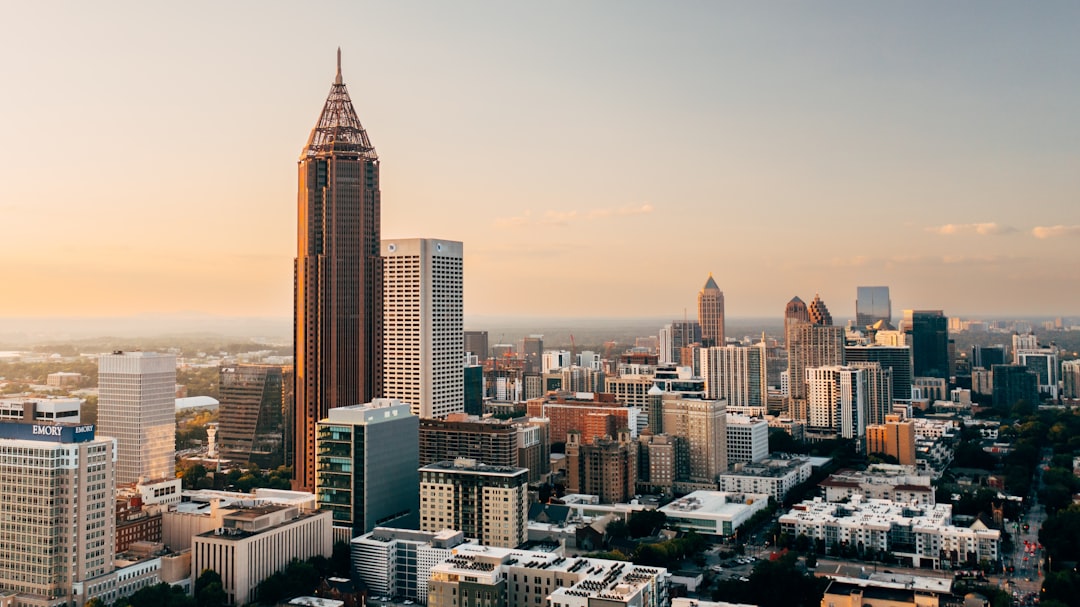
Atlanta Bulk Book Donation Pickup

Whether you're clearing a campus office in Midtown or winding down a nonprofit storage room in Decatur, we make the logistics straightforward. We offer free book donation pickup across Greater Atlanta for collections of 30 or more boxes — with professional sorting and clear reporting on where your books end up.
Serving Midtown, Buckhead, Decatur & Greater Atlanta
We handle large-volume book donations for universities, schools, nonprofits, and businesses across Greater Atlanta — with free pickup for qualifying collections.
Atlanta is genuinely unusual among major US cities when it comes to book donations. The HBCU corridor — Spelman College, Morehouse College, Clark Atlanta University, and Morris Brown College, all within two miles of each other — produces synchronized waves of donated books at semester end. Meanwhile, Books for Africa, the world's largest shipper of donated books to the African continent, is headquartered here, giving Atlanta donations a direct international literacy pipeline that most cities simply don't have.
The busiest periods are May, August, and December — driven by semester move-outs across Emory, Georgia Tech, Georgia State, and the HBCU cluster. If you're planning a donation pickup during these months, booking two to three weeks ahead will give you the best scheduling options.
We coordinate pickups across all of Greater Atlanta — from Midtown's tech district and Buckhead's financial corridor to Decatur's historic square, Agnes Scott College, Virginia-Highland, Little Five Points, and out to Sandy Springs and Marietta. If your books are in the metro area, we can reach them.
We plan around Atlanta's unique academic calendar. The HBCU corridor — Spelman, Morehouse, and Clark Atlanta — runs on a synchronized semester schedule, which means May and August produce simultaneous multi-campus donation volumes. We build routes to handle these peaks efficiently rather than scrambling around them. Collections of 30 or more boxes qualify for free coordinated pickup.
Every book is evaluated for the best possible outcome: resale, literacy program placement, or — as a last resort — responsible paper recycling. We share clear volume metrics at each stage, which is useful for organizations that need to document outcomes for board reports or grant applications.
Atlanta's HBCU corridor and the presence of Books for Africa make professional pickup the most effective way to ensure donated books reach the right destination. When five campuses clear out simultaneously, self-managed drives quickly run out of storage, staff, and routing capacity.
| Factor | Self-Managed Drives | Professional Pickup Service |
|---|---|---|
| Pickup logistics & transportation | Staff coordinate vehicles, storage, and donor handoffs without dedicated routes. During peak move-out weeks, this quickly becomes unmanageable. | We handle scheduling, routing, and transport for collections of 30+ boxes — at no cost to the donor. Pickups are planned around Atlanta's academic calendar so peak periods don't create bottlenecks. |
| Storage & donation overflow | Storage space fills up fast during May and August campus clearances, causing delays and forcing donation sites to turn away books. | Regular large-volume pickups across Midtown, Buckhead, and Greater Atlanta keep storage clear and donation sites running throughout the year. |
| Donation outcomes & accountability | Difficult to track where books end up after a drive closes. Impact data for donor reporting is sparse or unavailable. | We provide detailed outcome data — resale volumes, literacy program placements, Books for Africa routing metrics, and <a href="https://zoombooks.ca/sustainability/">sustainability documentation</a> for CSR reports and grant applications. |
How bulk pickup works, where Atlanta donations come from, and what happens to your books after pickup.
The largest volumes of donated books in Atlanta come from a few predictable sources. Campus move-outs at Emory, Georgia Tech, Georgia State, Spelman, and Morehouse are the biggest driver, particularly in May and August when semester endings align. Estate clearouts across Buckhead, Decatur, and Virginia-Highland add consistent year-round volume. Nonprofit storage rooms in Little Five Points and East Atlanta periodically need clearing. And corporate office relocations downtown and in Midtown create one-time large collections that don't fit the self-managed drive model.
We handle bulk donations for all of these scenarios. For smaller personal collections (under 30 boxes), the Atlanta-Fulton Public Library, Books for Africa's direct drop-off program, and Goodwill of North Georgia are good options. Our service is designed for institutions and organizations managing larger volumes.
Common sources of large Atlanta book donations:
Atlanta's HBCU corridor is unlike any campus cluster in the country. Spelman, Morehouse, Clark Atlanta, and Morris Brown sit within two miles of each other and follow tightly synchronized semester calendars. When May move-outs arrive, multiple campuses generate large book collections simultaneously. No self-managed drive has the vehicle capacity or storage space to run coordinated multi-stop routes across five campuses at once.
Beyond the campus cluster, Atlanta is home to Books for Africa — meaning donated books here have a direct international impact path. Getting academic texts and children's books sorted correctly for that pipeline requires professional handling that goes well beyond what a casual drop-off program can offer.
What professional bulk pickup provides:
See our full process overview for more on how pickup and sorting works.
Atlanta has a three-way distribution path for donated books that's genuinely unusual among US cities. Because Books for Africa is headquartered here, academic texts from Emory, Georgia Tech, and HBCU programs can flow directly into established container shipment networks bound for African university libraries — a route most cities don't have access to at all.
Academic texts in social work, education, and the humanities from HBCU programs are regularly routed this way. Children's books in excellent condition are evaluated for international suitability alongside domestic literacy placements. General fiction and trade nonfiction goes to Georgia literacy nonprofits and resale channels.
Typical book donation outcomes in Atlanta:
Learn more about how we handle sustainability and responsible book processing across all donation streams.
If your collection is smaller than 30 boxes, or if you're an individual donor rather than an institution, Atlanta has several good alternatives:
Atlanta-Fulton Public Library: Accepts books in good condition at select branches. The Friends of the Atlanta-Fulton Public Library runs regular book sales to support library programs.
Books for Africa (Atlanta HQ): Accepts donations directly for their international literacy programs. A natural fit for educational materials and academic texts destined for African schools and libraries.
Goodwill of North Georgia: Multiple metro Atlanta locations. Accepts book donations to support job training programs.
When bulk pickup makes more sense (30+ boxes):
We also serve donors in nearby cities — see our pages for Houston and Dallas if you have collections in multiple Southern locations.
Minimum Requirements Checklist
Ensure your collection meets our requirements for efficient, sustainable bulk donation processing
Bulk donations must consist of at least 30 properly packed boxes to qualify for our free pickup service.
Books should be boxed and arranged on pallets for efficient loading and warehouse processing.
Provide loading dock or ground-level access with clear instructions for our pickup team.
Book pickups 2-3 weeks ahead, especially during peak seasons (May, August, December).
Share where your books are stored, roughly how many boxes you have (30+ to qualify for free pickup), and your preferred timeline. We'll ask a few questions about access — loading docks, elevator availability, parking — and confirm whether your collection fits our service. No obligation at this stage.
We build your pickup into a route that accounts for Atlanta's academic calendar. If you're donating during May or August, we coordinate around the simultaneous HBCU corridor and Georgia Tech/Emory/Georgia State move-outs so your pickup doesn't compete with peak-season bottlenecks. Schedule directly here or reach out via the contact form.
Once collected, books are sorted by condition and category. Atlanta's unique position — Books for Africa headquartered here, strong HBCU academic output — means we make routing decisions that most cities don't face: academic texts evaluated for African university programs, children's books assessed for international vs. domestic literacy placements, general fiction routed to Georgia nonprofits or resale. Every book follows a traceable path.
We share a clear summary of outcomes: volumes picked up, resale placements, literacy program distributions (including Books for Africa metrics when applicable), and recycling totals. These reports are formatted to be useful for institutional reporting — HBCU development offices, university sustainability statements, corporate CSR disclosures, and grant applications.
For large collections of 30 or more boxes, we offer free pickup across Greater Atlanta — Midtown, Buckhead, Decatur, and all surrounding neighborhoods. For smaller personal donations, the Atlanta-Fulton Public Library, Books for Africa (which has its headquarters here), and Goodwill of North Georgia locations throughout metro Atlanta are all good options.
Yes. For collections that meet our 30-box minimum, there's no charge for pickup, transport, or sorting. The service is supported by resale revenue from donated books in good condition.
Academic texts from HBCU programs — particularly education, social work, and humanities — are routed toward literacy nonprofits and, in many cases, Books for Africa's international programs. Children's books in excellent condition are evaluated for Books for Africa's container shipments to African schools. Recent fiction, clean nonfiction, and college textbooks from Emory, Georgia Tech, and Georgia State all move well through resale channels. Books in good condition donated in Atlanta have an unusually high probability of reaching active readers — locally or internationally — compared to most other cities.
The busiest periods are May, August, and December, aligned with campus move-outs at Atlanta's universities and HBCUs. During those months, scheduling two to three weeks ahead is recommended. The rest of the year, lead times are shorter.
Yes. Multi-site coordination is one of the things we do well — particularly for the HBCU corridor, where Spelman, Morehouse, Clark Atlanta, and Georgia State can all need pickup during the same narrow window. Contact us with the details and we'll plan the routes accordingly.
Yes. Large-volume collections staged on pallets are our standard. HBCU campuses typically have loading dock access that makes bulk pickup efficient. If your location has access limitations — older buildings, no freight elevator, street-only access — let us know when scheduling and we'll plan around it.
Atlanta's summer heat and humidity are the main concern for books in storage. If your collection is in a non-climate-controlled space — a garage, outdoor storage unit, or unfinished basement — move it indoors before pickup if possible. Heat and moisture can damage spines and create mold that disqualifies books from resale and literacy programs. When packing, sorting by general category (academic, children's, general fiction) speeds our sorting process and improves routing accuracy for the Books for Africa evaluation. Pack in sturdy boxes, and share any building access details when you schedule.
Atlanta donations follow a three-way path: resale (roughly 40–50%) through online and academic channels; literacy programs (30–35%) split between local Georgia nonprofits and Books for Africa's international pipeline; and responsible paper recycling (15–25%) for materials that can't be reused. You receive a detailed outcome report — including Books for Africa routing data where applicable — formatted for institutional reporting needs.
Both are excellent options for smaller or individual donations. We specialize in institutional collections of 30+ boxes that require coordinated logistics, multi-site pickup capability, and formal impact reporting. If you're managing a campus clearance, estate settlement, or large nonprofit cleanup, those logistics needs go beyond what drop-off programs handle.

Tell us about your collection — size, location (anywhere in Greater Atlanta), and your preferred timeline. We'll confirm whether it qualifies for free pickup and get something scheduled. Reach out here or visit our book donations hub to learn more.
Related Resources
Learn how our LibraryLink program supports deaccessioning, pickups, and revenue for libraries.
Learn MoreDiscover our responsible book recycling process and how we keep books out of landfills.
Learn MoreSee how we help thrift stores manage surplus inventory with pickups and resale support.
Learn More