Introducing LibraryLink: Helping Libraries generate revenue from their deaccessioned materials.

Introducing LibraryLink: Helping Libraries generate revenue from their deaccessioned materials.

New York High-Volume Book Donations

From semester move-outs in Manhattan to nonprofit storage rooms in Brooklyn, New York generates more donated books per square mile than almost anywhere else. We handle free bulk pickup across all five boroughs for collections of 30 or more boxes — so your books find a good home instead of a dumpster.
Serving Manhattan, Brooklyn, Queens & All NYC Boroughs
We specialize in free bulk book donation pickup for universities, publishers, nonprofits, and businesses throughout New York City and the surrounding area.
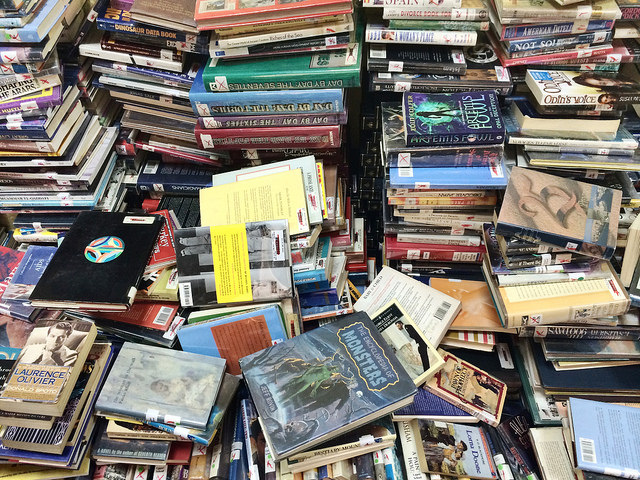
Campus move-outs at NYU, Columbia, CUNY, the New School, and Fordham. Publisher overstock from Penguin Random House, HarperCollins, and Scholastic. Estate clearouts in the Upper West Side and Park Slope. Nonprofit storage cleanups in Harlem and the Bronx. New York book donations arrive year-round, from every direction, at every scale. Our job is to make sure they move efficiently — from your building to a reader who needs them.
Donation volumes peak in May-June and August-September with campus move-outs, and again in December with year-end drives. If you're planning a pickup during those windows, schedule 2–3 weeks in advance — Manhattan building access alone often requires 3–5 days of coordination with building superintendents.
We coordinate pickups across all five boroughs: Manhattan (Upper West Side, Harlem, Greenwich Village), Brooklyn (Park Slope, Williamsburg, DUMBO), Queens, the Bronx, and Staten Island. Whether you're on the 30th floor of a midtown tower or a ground-floor warehouse in Long Island City, we handle the logistics.
We have real experience with New York's academic calendar surge. NYU, Columbia, CUNY, the New School, and Fordham all clear out on similar timelines — we schedule pickups around that convergence, with freight elevator booking and building access coordination handled in advance. Minimum 30 boxes; peak availability May-June, August-September, and December.
Resale comes first, then placement with literacy nonprofits like Housing Works Bookstore and Books Through Bars NYC, then educational programs. Only what genuinely can't be reused goes to responsible recycling — and we report every outcome clearly.
New York's vertical density makes bulk book logistics genuinely difficult. A single midtown office might occupy 15 floors, with freight elevator windows booked days out and 20-minute loading zone limits on the street below. Self-managed drives work well for a few boxes — they don't scale to institutional volumes.
| Factor | Self-Managed Drives | Professional Pickup Service |
|---|---|---|
| Pickup logistics & transportation | Staff coordinate their own vehicles and storage, often struggling with NYC loading dock restrictions, freight elevator schedules, and cross-borough routing during peak donation seasons. | We handle freight elevator booking, loading zone coordination, and cross-borough routing on a predictable schedule. Peak season pickups (May-June, August-September, December) are planned well in advance. |
| Storage & donation overflow | Storage fills quickly during campus move-out season, slowing intake and creating bottlenecks — especially in space-limited NYC environments. | Regular large-volume pickups across Manhattan, Brooklyn, Queens, and the Bronx keep donation sites clear year-round and prevent quality degradation from prolonged storage. |
| Donation outcomes & accountability | Limited visibility into where books actually go after a drive ends. Hard to report impact to donors, board members, or ESG stakeholders. | Housing Works Bookstore, NYC school literacy programs, and university resale channels receive curated donations. Publisher partners get outcome data for annual sustainability reports. Every pickup includes clear documentation of where books landed. |
Everything you need to know about arranging bulk book donation pickups in New York City.
New York generates book donations from more sources than almost any other city. Campus move-outs at NYU, Columbia, CUNY, the New School, and Fordham surge twice a year. Estate clearouts happen constantly across the Upper West Side, Park Slope, and Williamsburg. Nonprofit storage cleanups in Manhattan, Brooklyn, Queens, and Harlem run year-round. And New York's publishing industry adds a category that barely exists elsewhere: large batches of publisher overstock, unsold review copies, and editorial library deaccessions that need proper sorting before redistribution.
Organizations looking to donate books in New York often face the same core problem: volume. Drop-off programs work for a box or two. They don't work for 50 boxes from a university library or 200 boxes from a publisher clear-out. That's where we come in. We specialize in bulk book donations for institutions managing 30 or more boxes at once — campuses, estate settlements, and multi-location nonprofits.
Common sources of bulk book donations in New York:
New York's density creates logistics challenges that don't exist in other cities. A single midtown office building might have 15+ floors of employees with books to donate — and building management controls a strict freight elevator schedule, 20-minute loading zone windows, and vehicle staging that must be booked days in advance. Volunteer-driven drives can't navigate that infrastructure reliably.
Cross-borough pickups add another layer. A publisher in Midtown, a university in Morningside Heights, and a nonprofit in Williamsburg might all need pickups the same week. That requires coordinated routing and a vehicle large enough to handle combined loads — not something a self-managed drive can sustain.
What professional bulk pickup provides in New York:
For smaller donations (under 30 boxes), Housing Works Bookstore in Manhattan and NYC Public Library donation programs are both excellent options.
New York-donated books flow into one of the richest literary ecosystems in the world. Housing Works Bookstore & Cafe in SoHo — a beloved nonprofit supporting New Yorkers with HIV/AIDS — receives curated titles in good condition. NYC's school libraries and Brooklyn Public Library literacy programs receive children's books and educational materials. Publisher overstock from Penguin Random House, HarperCollins, and Scholastic often goes directly to schools and community organizations through dedicated channels.
Academic texts from Columbia, NYU, and Fordham feed academic resale markets that keep New York-published books circulating within the academic ecosystem. And throughout our process, every step is documented — because in New York's publishing and literary world, accountability to funders and board members isn't optional.
Typical book donation outcomes:
For collections under 30 boxes, New York has several good options depending on the type of books and the impact you're looking for:
New York Public Library: Accepts books in good condition at select branches throughout Manhattan, the Bronx, and Staten Island. Friends of the NYPL hosts regular sales to fund library programs. Best for: individual donors and small collections.
Housing Works Bookstore: Manhattan nonprofit that accepts book donations to support HIV/AIDS services and homelessness prevention. Best for: small to medium donations with a strong community mission.
Books Through Bars NYC: Sends books to incarcerated individuals. Best for: educational titles, fiction, and social justice-themed books.
When professional bulk pickup makes more sense (30+ boxes):
Other cities with active bulk donation programs: Boston, Chicago, and Los Angeles.
Minimum Requirements Checklist
Ensure your collection meets our requirements for efficient, sustainable bulk donation processing
Bulk donations must consist of at least 30 properly packed boxes to qualify for our free pickup service.
Books should be boxed and arranged on pallets for efficient loading and warehouse processing.
Provide loading dock or ground-level access with clear instructions for our pickup team.
Book pickups 2-3 weeks ahead, especially during peak seasons (May, August, December).
Tell us where your books are stored, roughly how many boxes you have (30-box minimum for free pickup), and any important dates — move-out deadlines, campaign end dates, lease expirations. We'll ask a few questions about building access and help you plan a pickup that actually works with your timeline.
For Manhattan high-rises and midtown offices, we coordinate freight elevator booking with building management, confirm loading zone access, and schedule early-morning pickups (7–9am) to beat loading dock conflicts. Brooklyn, Queens, and outer-borough pickups are routed efficiently together. Plan for 2–3 weeks of lead time during peak seasons; Manhattan building access typically requires 3–5 business days' notice to the superintendent.
Every New York pickup goes through a sorting process that reflects the city's unique donation landscape. Publisher overstock and review copies are identified and routed through dedicated publishing industry channels. Housing Works-eligible titles are flagged. Academic texts from Columbia, NYU, and Fordham are sorted by discipline for resale. Children's books in good condition go to NYC school programs. The goal is always the highest-value outcome for every book — not just the quickest path out the door.
We provide clear documentation of pickup volumes, resale rates, literacy program placements, and recycling outcomes. Publishing house ESG teams use our data for annual sustainability reports. Literary nonprofit funders and university development offices get the documentation they need for grant reporting. Board-ready summaries and volume breakdowns are standard on every pickup.
For bulk donations of 30 or more boxes, we provide free pickup across all five NYC boroughs — Manhattan, Brooklyn, Queens, the Bronx, and Staten Island. For smaller collections, the New York Public Library, Housing Works Bookstore in Manhattan, and Books Through Bars NYC are all worth considering.
Yes — pickup is free for collections of 30 or more boxes. That covers campus move-outs, estate collections, nonprofit storage cleanups, publisher overstock, and corporate relocations anywhere in New York City.
Publisher review copies and overstock have strong pathways through New York's literary nonprofits. Academic texts from Columbia, NYU, and Fordham serve solid resale markets. General fiction and children's books in good condition go to Housing Works and NYC school libraries. Virtually any book in decent shape has a useful home through our network — condition matters more than genre.
May-June and August-September are the busiest periods due to campus move-outs; December picks up with year-end donation drives. If your pickup falls in those windows, plan 2–3 weeks ahead. Manhattan building access often requires 3–5 business days of coordination with building management regardless of season.
Yes, we work with New York's academic institutions regularly. We coordinate the freight access, schedule around the academic calendar, and handle the volume — your facilities team just needs to let us know the dates and building details.
High-rise pickups require freight elevator booking with building management (usually 3–5 business days in advance), confirmation of loading zone access or street staging windows (typically 20-minute limits on Manhattan streets), and early-morning scheduling to avoid loading dock conflicts. When you contact us to schedule, include your building superintendent's name and contact number — it makes coordination significantly faster.
Keep boxes to 40 lbs or under — freight elevator loads need to stay manageable, and building staff sometimes pre-stage boxes at the loading dock before we arrive. Label boxes clearly. If you're donating publisher materials, grouping by category (overstock, review copies, editorial) speeds routing to schools and nonprofits. Schedule early morning pickups when possible to avoid loading zone conflicts on Manhattan streets.
New York donations flow to resale (40–50%), literacy program placement (30–35%), and responsible recycling (15–25%). Housing Works Bookstore, NYC school libraries, and Books Through Bars NYC receive curated titles. Publisher ESG teams and literary nonprofit funders receive transparent outcome documentation. Every pickup comes with clear reporting — not just a thank-you note.
Housing Works and NYPL are excellent for smaller personal donations. We specialize in large-volume institutional pickups — 30+ boxes minimum — with the logistics coordination, multi-borough capability, and impact reporting that universities, estates, publishers, and large nonprofits actually need.

Tell us your location (any of the five boroughs or surrounding areas), how many boxes you have, and when you need the pickup. If you meet the 30-box minimum, pickup is free. We'll take it from there — logistics, sorting, and impact reporting included.
Related Resources
Learn how our LibraryLink program supports deaccessioning, pickups, and revenue for libraries.
Learn MoreDiscover our responsible book recycling process and how we keep books out of landfills.
Learn MoreSee how we help thrift stores manage surplus inventory with pickups and resale support.
Learn More