Introducing LibraryLink: Helping Libraries generate revenue from their deaccessioned materials.

Introducing LibraryLink: Helping Libraries generate revenue from their deaccessioned materials.
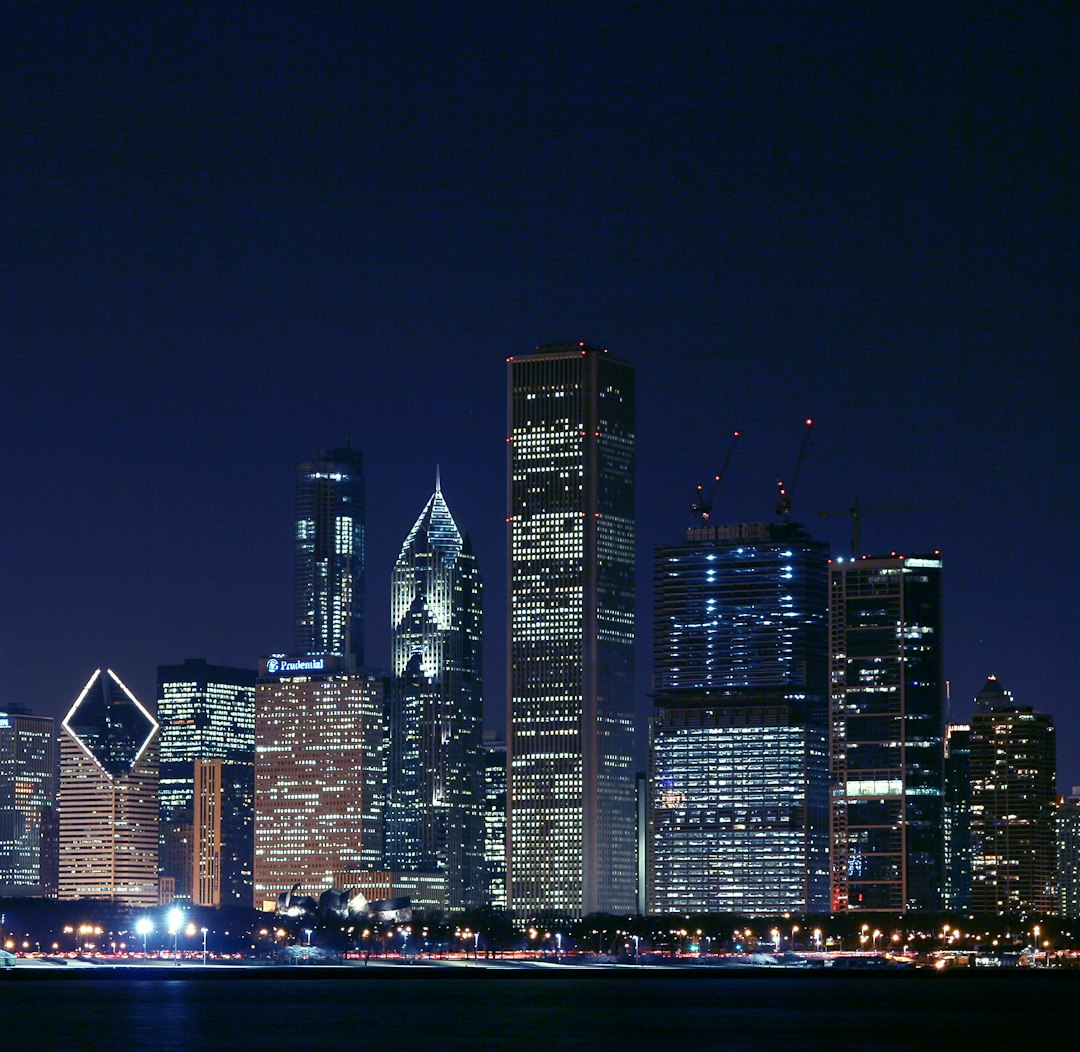
Chicago Bulk Book Donations

From campus move-outs in Hyde Park to nonprofit storage rooms in Lincoln Park, Chicago generates substantial book donations throughout the year. We handle free bulk pickup for collections of 30 or more boxes across all Chicago neighborhoods and the surrounding suburbs — so your books reach readers instead of landfills.
Serving Lincoln Park, Wicker Park, Hyde Park & All Chicagoland
We specialize in free bulk book donation pickup for universities, schools, nonprofits, and businesses throughout Chicago and the surrounding suburbs.
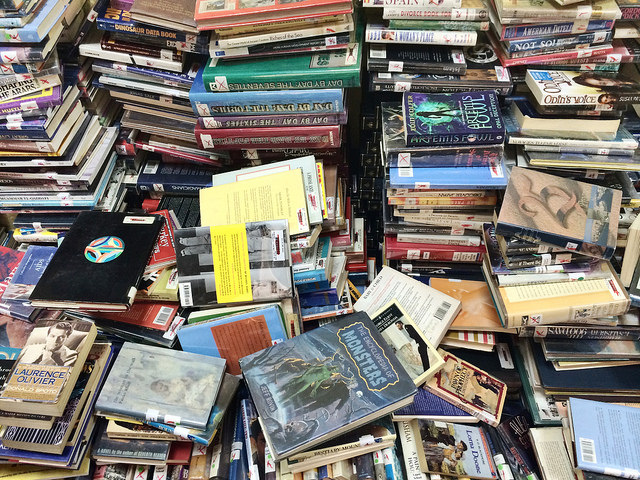
Semester move-outs at the University of Chicago and Northwestern, estate clearouts across Lincoln Park and Evanston, nonprofit cleanups in Logan Square and Pilsen — Chicago generates more donated books per square mile than almost any city in the country. The challenge isn't finding donations; it's managing the volume. Our book donation pickup service handles collections of 30 or more boxes across all Chicagoland neighborhoods, so you can focus on your mission rather than logistics.
The busiest months are May–June and August, when campus move-outs at University of Chicago, Northwestern, DePaul, Loyola, and UIC generate concentrated surges of donated books. December brings a secondary peak from year-end cleanouts. If your pickup falls in one of these windows, booking 2–3 weeks out is worth it.
We coordinate pickups across Chicago and the suburbs: Lincoln Park, Wicker Park, Hyde Park, Logan Square, Lakeview, Evanston, Oak Park, and Pilsen. If you're in Chicagoland, we can reach you — and bulk donations stay on schedule regardless of which neighborhood you're in.
We've built scheduling specifically around the university calendar. Move-outs at University of Chicago, Northwestern, DePaul, Loyola, and UIC all land in predictable windows — we plan capacity around them. The same applies to estate collections, nonprofit drives, and library deaccession projects.
Every collection gets sorted for the highest-value outcome first: resale, literacy programs through partners like Open Books Chicago and the Newberry Library, and educational distribution. Only books that genuinely can't be reused go to responsible recycling — and we document all of it.
Chicago winters are the most honest argument for professional pickup. Loading docks ice over, snow emergencies restrict street parking for days at a time, and no volunteer crew should be staging books outside in -10°F wind chills. Professional services run year-round with the equipment and scheduling flexibility Chicago weather demands. Add to that the city's geographic spread — DePaul in Lincoln Park, UChicago in Hyde Park, Northwestern in Evanston, UIC near the Loop — and multi-campus coordination becomes a logistics problem that self-managed drives simply can't solve efficiently.
| Factor | Self-Managed Drives | Professional Pickup Service |
|---|---|---|
| Pickup logistics & transportation | Staff coordinate vehicles, storage, and donor handoffs without dedicated routes. Time-intensive during peak move-out seasons, and volunteer availability is unpredictable. | Free coordinated pickup across Chicagoland on a predictable schedule. We handle routing, bulk loads, and timing — with extra capacity built in for May–June, August, and December peaks. |
| Storage & donation overflow | Storage fills quickly during move-out season and year-end drives, creating bottlenecks that slow intake and sometimes force donations to be turned away. | Regular large-volume pickups across Lincoln Park, Hyde Park, Evanston, and surrounding neighborhoods prevent backlog. Donation sites stay open year-round and book quality is protected with proper handling. |
| Donation outcomes & accountability | Limited visibility into what happens to books after pickup. Hard to report meaningful community impact to donors, funders, or board members. | Outcome tracking places books with Open Books Chicago's Pilsen literacy store, the Newberry Library's specialized collections, and resale markets — with detailed volume metrics ready for Chicago Community Trust and Illinois literacy funder applications. |
What to know about arranging bulk book donation pickups in Chicago and the surrounding suburbs.
The largest sources of Chicago book donations are predictable: semester move-outs at the University of Chicago, Northwestern, DePaul, Loyola, and UIC produce concentrated volumes in May–June and August. Estate clearouts across Lincoln Park, Evanston, and Oak Park generate donations year-round. Nonprofit storage cleanups in Wicker Park, Hyde Park, Logan Square, and Pilsen add to the flow. The common thread is volume — organizations that search for ways to donate books in Chicago are typically managing far more boxes than a drop-off location can absorb.
We specialize in exactly that situation: bulk book donations for institutions and organizations managing 30 or more boxes at once. While excellent local options like Open Books Chicago, the Chicago Public Library, and the Newberry Library serve individual donors well, they're not equipped for institutional volumes. That's the gap we fill — campus facilities, estate settlements, and multi-location nonprofits with more books than any drop-off can handle.
Common donation sources in Chicago:
Chicago's defining logistics challenge for book donations is the weather. From November through March, self-managed donation drives routinely stall: loading docks ice over, snow emergencies restrict street parking for hours or days, and volunteer crews can't commit to outdoor pallet work in serious cold. The result is a winter backlog that creates a compressed spring surge — too many boxes arriving at drop-off sites all at once.
Professional pickup services operate year-round with equipment, route planning, and scheduling flexibility built for Chicago winters. Beyond weather, the city's geography creates coordination challenges of its own. DePaul sits in Lincoln Park, UChicago is in Hyde Park, Northwestern is in Evanston, and UIC is near the Loop. Running multi-campus coordination across that range requires logistics infrastructure that no volunteer-run drive can efficiently replicate. See our full process overview for details on how we handle it.
What professional bulk pickup offers in Chicago:
For smaller donations (under 30 boxes), Open Books Chicago in Pilsen or Chicago Public Library donation programs are good options.
Chicago has one of the richest local book donation ecosystems in the country. The combination of literacy organizations, immigrant community nonprofits, research libraries, and a highly active public library system creates distribution options that most US cities can't match.
Open Books Chicago, the nonprofit's literacy-focused used bookstore in Pilsen, is the anchor of Chicago's local literacy pipeline. Sales from Open Books' retail store fund reading and writing programs for Chicago youth and adults directly — which means book quality is a real factor in literacy program funding, not just optics. The Newberry Library accepts specialized historical and scholarly collections that would otherwise have very limited placement options. Illinois literacy nonprofits serving Chicago's large Polish, Mexican, and Chinese communities have ongoing demand for multilingual materials. The Chicago Public Library system rounds out the network.
Typical donation outcomes in Chicago:
Chicago's literary culture — home of the Newberry Library and the Chicago Manual of Style — means this is a city that takes book outcomes seriously. Our reporting is built to that standard.
For donors with smaller volumes (under 30 boxes) or specific book types, Chicago has strong local options:
Chicago Public Library: The CPL accepts books in good condition at select branches throughout the city. Friends of the Chicago Public Library hosts regular sales to support library programs. Best for individual donors and small collections.
Open Books Chicago: Nonprofit literacy organization with a retail store in Pilsen. Accepts book donations to support literacy programs for youth and adults. Best for small to medium donations with a literacy focus.
Newberry Library: Independent research library accepting specialized donations of historical and scholarly materials. Best for rare books, academic collections, and research materials.
When to use professional bulk pickup (30+ boxes):
You can also browse our full donation service overview or see how we handle sustainability reporting for organizations with ESG or grant requirements.
Minimum Requirements Checklist
Ensure your collection meets our requirements for efficient, sustainable bulk donation processing
Bulk donations must consist of at least 30 properly packed boxes to qualify for our free pickup service.
Books should be boxed and arranged on pallets for efficient loading and warehouse processing.
Provide loading dock or ground-level access with clear instructions for our pickup team.
Book pickups 2-3 weeks ahead, especially during peak seasons (May, August, December).
Tell us where your books are stored, roughly how many boxes you have (30 is the minimum for free pickup), and any important timing — move-out deadlines, campaign end dates, estate settlement schedules. We'll help you plan a pickup route that works for your location, whether that's Lincoln Park, Wicker Park, Hyde Park, or anywhere else in Chicagoland.
We build Chicago's winter realities into every booking — snow emergency parking rules, variable weather windows, and the geographic spread from Lincoln Park to Hyde Park to Evanston are all factored in. During winter months, we build scheduling flexibility into every confirmed booking. Share your loading dock details and any access restrictions when you book, and we'll handle the rest.
Collected books are sorted specifically for Chicago's distribution network. Academic texts from UChicago and Northwestern are evaluated for academic resale channels. Books suitable for Open Books Chicago's Pilsen literacy store are identified separately. Multilingual books — Spanish, Polish, Chinese, Arabic — are flagged for immigrant community nonprofit partners. Every donation follows the highest-value path available. Learn more about how our process works.
We provide detailed reports on pickup volumes, resale rates, literacy program placements, and recycling outcomes. Chicago's grant-heavy nonprofit sector runs on this kind of documentation — Chicago Community Trust, Illinois literacy funders, and similar organizations require detailed community impact metrics. Our reports are structured to support those applications directly, with volume breakdowns by destination category.
For bulk donations of 30 or more boxes, we offer free pickup across Chicago and the suburbs — Lincoln Park, Wicker Park, Hyde Park, Evanston, Oak Park, and beyond. For smaller collections, good options include the Chicago Public Library, Open Books Chicago in Pilsen, and the Newberry Library for specialized materials.
Yes. Free pickup is available for collections of 30 or more boxes anywhere in Chicagoland — campus move-outs, estate collections, nonprofit cleanups, library deaccessions, and corporate relocations all qualify.
Chicago's distribution network creates strong demand across several categories. Academic and research texts from UChicago, Northwestern, DePaul, and Loyola have solid resale value through academic channels. Open Books Chicago values books in good condition across all genres — their retail model means quality across categories directly supports literacy program funding. Multilingual books are in especially high demand: Spanish, Polish, Chinese, and Arabic titles are actively sought by Chicago's immigrant community nonprofits. Children's books in excellent condition are always prioritized. Recent fiction and trade nonfiction round out a strong donation.
The busiest donation windows are May–June, August, and December, driven by campus move-outs and year-end cleanouts. If you're in one of those windows, booking 2–3 weeks out is worth doing. Summer sees notably higher volumes from University of Chicago, Northwestern, DePaul, Loyola, and UIC.
Yes — campus move-out coordination is a core part of what we do. We handle pickups and professional sorting for large university collections that meet the 30-box minimum across all Chicago-area campuses.
Yes. Chicago's institutional buildings generally have solid freight access, though many pre-war buildings have narrower dock configurations. Share dock dimensions and any access restrictions when you schedule so we can plan equipment accordingly. For winter pickups, we schedule around snow emergencies and avoid days when exterior dock staging is unsafe. If you're unsure whether your facility works for a large-volume pickup, just reach out — we're happy to talk through the logistics.
Two things matter most in Chicago. First, if books have been stored in an unheated garage, basement, or storage unit, move them to climate-controlled space before pickup — freeze-thaw cycles damage spines, warp covers, and can cause mold that disqualifies books from all channels. Second, for winter pickups (November through March), morning weekday slots are typically easier for street access than evenings or weekends. If you can sort by language (English, Spanish, Polish, Chinese), it speeds the multilingual sorting step meaningfully. Otherwise, sorting by category (fiction, nonfiction, children's, academic) is helpful, and sharing loading dock and parking details at booking keeps the day efficient.
Chicago donations feed one of the richest local book ecosystems in the US. Roughly 40–50% go to resale through online and academic channels. About 30–35% go to Open Books Chicago's Pilsen literacy retail store, Illinois immigrant community nonprofits, and Chicago Public Library partners. The remaining 15–25% go to certified paper recycling for damaged or unsaleable materials — nothing to landfill. You receive detailed metrics formatted for Chicago Community Trust grant reporting and Illinois literacy funder applications.
Open Books Chicago and the Chicago Public Library are excellent for smaller donations. We work at institutional scale — 30 or more boxes — with logistics coordination, multi-location capability, and impact reporting built for universities, large estates, and nonprofits that need volume management rather than a drop-off location.

Tell us your donation size, location, and timeline, and we'll take it from there. Free pickup is available for collections of 30 or more boxes anywhere in Chicagoland — with professional sorting and impact documentation included. Schedule a pickup or get in touch to talk through your situation.
Related Resources
Learn how our LibraryLink program supports deaccessioning, pickups, and revenue for libraries.
Learn MoreDiscover our responsible book recycling process and how we keep books out of landfills.
Learn MoreSee how we help thrift stores manage surplus inventory with pickups and resale support.
Learn More