Introducing LibraryLink: Helping Libraries generate revenue from their deaccessioned materials.

Introducing LibraryLink: Helping Libraries generate revenue from their deaccessioned materials.
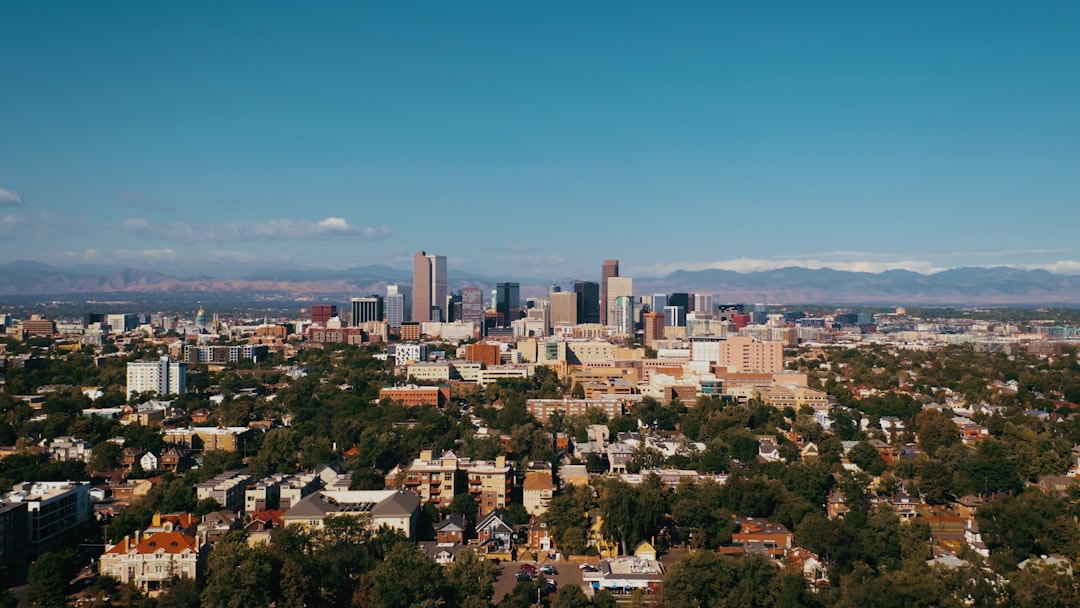
Denver Bulk Book Donations

From campus move-outs at CU Denver and the University of Denver to nonprofit cleanouts in Capitol Hill and RiNo, Denver generates consistent book donation volumes with a donation calendar unlike any other US city. We provide free bulk pickup for collections of 30 or more boxes across Greater Denver, Boulder, and the Front Range corridor.
Serving LoDo, Capitol Hill, Cherry Creek & Greater Denver
We specialize in free bulk book donation pickup for universities, schools, nonprofits, and businesses throughout Greater Denver and the surrounding Front Range communities.
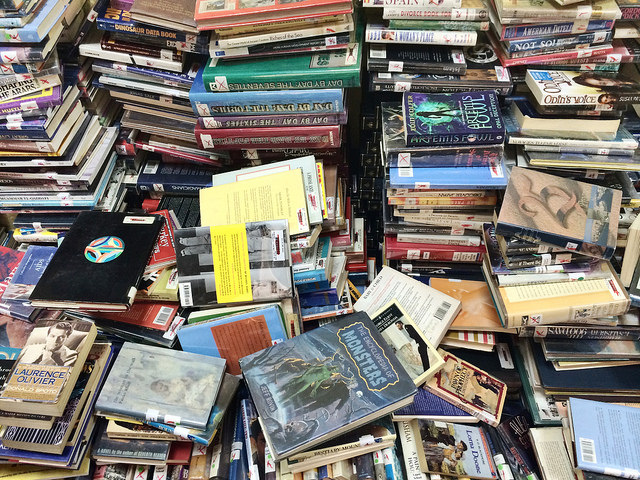
Denver's book donation calendar follows two distinct peaks. The first is the standard academic surge in May and August, when CU Denver, University of Denver, Metro State, and nearby CU Boulder all generate concentrated move-out volumes. The second is genuinely Denver's own: October and November, as Front Range residents clear out their homes before departing for ski season in Vail, Breckenridge, and Steamboat. This two-peak calendar is what makes professional coordination particularly valuable here. Our bulk donation pickup service handles collections of 30 or more boxes across Greater Denver and the entire Front Range corridor.
May and August track the academic calendar, while October–November reflects the pre-ski season pattern that's unique to the Front Range. January also sees a secondary uptick as residents return from the mountains and assess what they want to keep. If your pickup falls in any of these windows, booking 2–3 weeks out is worthwhile.
We coordinate pickups across Denver's neighborhoods — LoDo, Capitol Hill, Cherry Creek, Highlands, RiNo — and the broader Front Range corridor from Fort Collins and Boulder in the north down to Colorado Springs. Mountain-adjacent communities like Golden, Evergreen, and Conifer are reachable too; contact us early for those locations.
Denver's donation calendar has two distinct surges: the standard academic move-outs at CU Denver, University of Denver, Metro State, and CU Boulder in May and August, and the pre-ski season wave in October–November. We plan capacity around both so your pickup doesn't compete with a surge. Estate collections, nonprofit drives, and library deaccession projects are handled the same way.
Colorado's dry climate means Denver donations typically arrive in better condition than those from humid markets — which translates to more books reaching resale channels and literacy programs rather than recycling. Every collection is sorted for the best available outcome first, with certified recycling reserved for materials that genuinely can't be reused.
Denver's two-peak calendar is the honest argument for professional coordination. A self-managed seasonal drive typically plans around one peak — academic in May/August, or pre-ski in October/November — not both. Professional services maintain capacity across both windows, plus year-round availability for estates, corporate relocations, and library deaccessions that don't follow any seasonal pattern.
| Factor | Self-Managed Drives | Professional Pickup Service |
|---|---|---|
| Pickup logistics & transportation | Staff coordinate vehicles, storage, and donor handoffs without dedicated routes. Time-intensive during peak seasons, with no infrastructure for Front Range multi-city coordination. | Free coordinated pickup across Greater Denver and the Front Range on a predictable schedule. Peak capacity is planned for May, August, and October–November, with year-round availability. |
| Storage & donation overflow | Storage fills quickly during move-out season and the pre-ski window, slowing intake and creating backlogs that affect book quality. | Regular large-volume pickups across LoDo, Capitol Hill, and Greater Denver prevent backlog. Denver's dry climate helps preserve book quality during pallet staging — more books arrive in condition for reuse. |
| Donation outcomes & accountability | Limited visibility into what happens to books after pickup. Hard to report meaningful sustainability outcomes to funders, donors, or boards. | Detailed outcome reporting supports Tattered Cover's community programs, the Denver Public Library Foundation, and BookGive Denver. Colorado nonprofit funders increasingly require circular economy metrics — our reports document exactly how many books were resold, redistributed, and recycled, with zero to landfill. |
What to know about arranging bulk book donation pickups in the Denver and Boulder area.
Denver book donations flow consistently throughout the year, but with a calendar that's genuinely different from other US cities. The academic surge in May and August from CU Denver, University of Denver, Metro State, and nearby CU Boulder is predictable. What's distinctive to Denver is the October–November wave: Front Range residents clearing their homes before heading to mountain properties in Vail, Breckenridge, and Steamboat. Estate clearouts in Cherry Creek, Washington Park, and Denver Tech Center, plus nonprofit storage cleanups in Capitol Hill, RiNo, and Highlands, add consistent volume year-round. The common thread is volume — organizations searching for ways to donate books in Denver are typically managing more boxes than a local drop-off can absorb.
We handle that volume. While local options like Denver Public Library and Tattered Cover Bookstore serve individual donors well, they're not equipped for institutional quantities. We specialize in bulk book donations — 30 or more boxes — from campus facilities, estate settlements, and multi-location nonprofits. If you're in Phoenix or anywhere else in the Mountain West, we serve those cities too.
Common donation sources in Greater Denver:
Denver's two-peak donation calendar is what makes professional coordination genuinely useful here. The academic surge in May and August from CU Boulder, CU Denver, University of Denver, and Metro State is significant on its own. Add the October–November pre-ski season wave — Front Range residents clearing out before departing for Vail, Breckenridge, and Steamboat Springs — and you have two major surges in a single calendar year. Self-managed drives typically plan around one; professional services handle both without a gap in capacity.
Denver's geography adds another layer. Organizations along the Front Range corridor — Fort Collins in the north, Colorado Springs in the south — regularly use Denver-metro pickup services. A single professional route can coordinate pickups from Boulder, Lakewood, Denver, and Aurora in one run, covering distances that make self-managed logistics impractical. Learn more about how we handle the process.
What professional bulk pickup offers in Denver:
For smaller donations (under 30 boxes), Denver Public Library, Tattered Cover Bookstore, or BookGive Denver are good options.
Denver donors tend to care about two things: where their books actually go, and how well the outcome is documented. Colorado consistently ranks among the top states for library visits per capita, and the local donation ecosystem reflects it. People here want to know that donated books are finding readers, not filling a dumpster.
There's also a measurable climate advantage at work. Denver's dry, high-altitude air — typically below 40% relative humidity — preserves book condition significantly better than humid markets. Books donated from Colorado garages and basements often arrive in better shape than the same books stored in Houston or Miami. That translates directly into better outcomes: a higher share of Denver donations qualify for resale or literacy program placement rather than recycling. More books find new readers; fewer go to paper recycling. The math works in donors' favor.
Typical donation outcomes in Denver:
Colorado nonprofit funders increasingly require circular economy metrics as part of grant applications. Our sustainability reporting supports those requirements directly.
For donors with smaller volumes (under 30 boxes) or specific book types, Denver has good local options:
Denver Public Library: Accepts books in good condition at select branches. Friends of the Library hosts regular sales to support library programs. Best for individual donors and small collections.
Tattered Cover Bookstore: Denver's beloved independent bookstore occasionally accepts donations for specific programs. Check with individual locations for current needs. Best for local literary community support.
ARC Thrift Stores: Multiple Colorado locations accept book donations. Proceeds support programs for people with intellectual and developmental disabilities. Best for small to medium donations with a community impact focus.
When to use professional bulk pickup (30+ boxes):
You can also review our full donation service overview or reach out to discuss your specific situation.
Minimum Requirements Checklist
Ensure your collection meets our requirements for efficient, sustainable bulk donation processing
Bulk donations must consist of at least 30 properly packed boxes to qualify for our free pickup service.
Books should be boxed and arranged on pallets for efficient loading and warehouse processing.
Provide loading dock or ground-level access with clear instructions for our pickup team.
Book pickups 2-3 weeks ahead, especially during peak seasons (May, August, December).
Tell us where your books are stored, roughly how many boxes you have (30 is the minimum for free pickup), and any timing that matters — move-out deadlines, pre-ski season clearout windows, estate settlement schedules. We'll plan a pickup route that works for your location, whether that's LoDo, Capitol Hill, or anywhere along the Front Range.
We coordinate free bulk pickup around Denver's two-peak donation calendar — May/August academic move-outs from CU Boulder, CU Denver, DU, and Metro State, and the October/November pre-ski season wave from Front Range residents. We also run Front Range corridor routes that span Fort Collins, Boulder, Denver, Aurora, and Colorado Springs in a single run. For mountain-adjacent communities in Golden, Evergreen, or Conifer, reach out early so we can account for I-70 corridor access windows.
Denver donations benefit from Colorado's dry climate — a higher-than-average share arrive in condition grade A or B, meaning more reach resale channels and literacy programs rather than recycling. Sorting covers three streams: outdoor, nature, Colorado-specific, and academic titles from CU Boulder and DU for resale; general fiction, children's books, and trade nonfiction for BookGive Denver, Denver Public Library Foundation, and Tattered Cover community programs; and certified recycling for anything genuinely damaged. We generate the condition and outcome data that Colorado sustainability-oriented donors and funders expect. See our full process overview for details.
Impact reports are formatted for Colorado's sustainability-oriented organizations — CU Boulder's Office of Sustainability, Colorado nonprofit funders that require circular economy metrics, and mountain community libraries in Vail, Breckenridge, and Steamboat that receive books from Denver collections. Reports document every book's destination: resale, literacy program placement, or certified recycling, with nothing to landfill. For donors who care about Colorado's environmental values, this is the documentation that makes the donation complete.
For bulk donations of 30 or more boxes, we offer free pickup across Greater Denver, LoDo, Capitol Hill, Cherry Creek, and the Front Range. For smaller collections, good options include Denver Public Library, Tattered Cover Bookstore, or ARC Thrift Stores.
Yes. Free pickup is available for collections of 30 or more boxes across Greater Denver and the Front Range — campus move-outs, estate collections, nonprofit cleanups, corporate relocations, and pre-ski season clearouts all qualify.
Outdoor, skiing, hiking, mountain sports, and Colorado-specific travel and nature books have strong local resale value that's genuinely unique to the Denver market. Academic books from CU Boulder — a top-tier research university — and DU professional program texts are in consistent demand. General fiction, children's books, and trade nonfiction perform well too. One meaningful advantage here: Colorado's dry, low-humidity climate means even books stored in Denver-area garages for years often arrive in solid condition, with less mold and mildew than you'd see from humid climates. That condition advantage means a higher share of Denver donations qualify for resale or literacy programs rather than recycling.
Denver has three pickup peaks worth planning around: May and August for academic move-outs, and October–November for the pre-ski season wave as Front Range residents clear out before heading to the mountains. January also sees a modest uptick on the return. Booking 2–3 weeks out during any of these windows is worthwhile.
Yes. Campus move-out coordination is a core part of what we do. We handle pickups and professional sorting for large university collections that meet the 30-box minimum across all Denver-area campuses, including CU Boulder.
Yes, with some planning. Front Range facilities generally have solid loading dock access, and Denver's high-altitude dry air actually helps book condition during pallet staging — books hold up better than in humid coastal cities. For pickups from communities along the I-70 corridor (Golden, Evergreen, Conifer) or farther into the mountains, contact us at least 3 weeks ahead. Access windows are narrower in those areas, and we need to factor in mountain corridor scheduling.
Good news for Colorado donors: Denver's dry, low-humidity climate means your books are likely in better condition than you expect, even after years in a garage. The main damage risk here isn't moisture — it's sun exposure. Check books stored near windows or in sun-exposed spaces for fading and UV brittleness. Sort by genre where possible; outdoor, nature, and Colorado-specific titles are worth labeling separately since they have local resale value that's unique to this market. If you're clearing a home before a ski season move to Vail, Breckenridge, or Steamboat, reach out at least 3 weeks ahead of your move date so pickup can be aligned with your timeline.
Denver donations follow Colorado's sustainability-first values. Roughly 40–55% go to resale through online and Front Range academic channels (the climate advantage means more books qualify). About 30–35% go to Denver Public Library programs and Colorado literacy nonprofits including BookGive Denver. The remaining 10–25% go to certified paper recycling — zero books to landfill, and that recycling percentage is lower than the national average thanks to the condition quality of Colorado donations. You receive detailed reporting aligned with Colorado's sustainability standards for nonprofit grant applications, corporate ESG filings, and community impact documentation.
Denver Public Library and Tattered Cover are excellent for individual donors with smaller collections. We work at institutional scale — 30 or more boxes — with logistics coordination, multi-site capability, and impact reporting built for universities, estates, and nonprofits that need volume management rather than a drop-off location.

Tell us your donation size, location in Greater Denver or along the Front Range, and any timing constraints. Free pickup for collections of 30 or more boxes — with professional sorting and sustainability documentation included. Schedule a pickup or reach out to talk through your situation.
Related Resources
Learn how our LibraryLink program supports deaccessioning, pickups, and revenue for libraries.
Learn MoreDiscover our responsible book recycling process and how we keep books out of landfills.
Learn MoreSee how we help thrift stores manage surplus inventory with pickups and resale support.
Learn More