Introducing LibraryLink: Helping Libraries generate revenue from their deaccessioned materials.

Introducing LibraryLink: Helping Libraries generate revenue from their deaccessioned materials.
 Wholesale & Sourcing
A complete buyer's guide for Indian importers, bookstore chains, and educational NGOs sourcing wholesale English-language children's books from North America. Covers Indian customs duties (HS 4901 — 0% BCD), content compliance requirements, condition grading, genre selection, sea freight logistics to Mumbai, Chennai, and Kolkata, and why Zoom Books pre-screens every shipment to prevent customs detention.

For Indian importers, bookstore chains, educational distributors, and NGOs, sourcing quality English-language children’s books at wholesale prices requires navigating two parallel challenges: finding a reliable volume supplier and ensuring every shipment clears Indian customs without incident. Wholesale children’s books for India sourced from North America offer strong value — but only when the supplier understands India’s import content regulations well enough to pre-screen shipments before they ship.
Zoom Books, based in Canada, ships bulk used children’s books to international buyers including importers across India. This guide covers everything an Indian buyer needs to know: import duties, content compliance, condition grading, genre selection, logistics, and minimum order requirements.
Key Takeaway
Zoom Books pre-screens every shipment to remove titles that risk detention at Indian customs — saving buyers weeks of clearance delays and potential fines. You receive curated, compliance-reviewed inventory, not a random pallet.
Books are classified under HS Code 4901 (printed books, brochures, leaflets, and similar printed matter) for Indian customs purposes. The duty structure for books imported into India has been designed to support education and literacy, which means the tariff burden is relatively modest compared to many other product categories.
Under India’s current customs tariff schedule, printed books (HS 4901) attract a Basic Customs Duty (BCD) of 0% — a deliberate policy to keep educational material affordable. However, importers must account for the full landed cost, which includes:
The practical result: the duty cost for imported printed books is effectively zero — your landed cost is primarily shipping, insurance, and port handling. This makes North American used books highly competitive on price once they clear customs, which is why content compliance (not tariff exposure) is the primary risk factor for India-bound book shipments.
0%
Basic Customs Duty
on Printed Books (HS 4901)
28–35
Days Sea Freight
Canada → Mumbai
$1–3
Per Book
Wholesale Price (USD)
This is where unsuspecting importers run into trouble. India’s customs authorities — operating under the Customs Act, 1962 and guided by provisions of the Indian Penal Code — can detain or seize imported books that contain content deemed:
Children’s books from North America occasionally contain content that, while entirely standard in Western publishing contexts, can be flagged at Indian customs. Examples include picture books with religious imagery that may be perceived as disrespectful across communities, books with mild sexual health content appropriate for older children in North America but outside the norm for Indian children’s publishing, and some politically themed early readers.
When a shipment is flagged, the entire container can be held while customs authorities review the content — a process that can take weeks and may result in partial or full seizure with associated fines.
Important Note
Customs detention is not just a delay — it triggers storage fees at the port, potential demurrage on the container, and in some cases the buyer must post a bond before goods are released for review. The cost of a single seizure event typically exceeds the savings from choosing an unscreened bulk supplier.
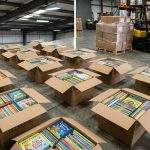
Zoom Books operates a physical sorting and grading facility in North America where every book in an India-bound shipment is reviewed before packing. Our team removes titles that present content compliance risk for Indian customs, including:
This pre-screening process happens before the shipment is sealed and documented. The result is a curated inventory of English-language children’s books that are commercially safe to import — picture books, early readers, chapter books, and educational titles that serve Indian schools, bookstores, and NGO reading programmes without customs risk.
You can review our full sourcing and grading process on the Zoom Books Our Process page.
Zoom Books grades all used books before shipment using a standardised condition system. For children’s books shipped to India, buyers typically select from:
Most Indian buyers for retail distribution select Grade A/B mixed lots. NGOs and reading-programme operators often choose Grade B/C for maximum volume at the lowest per-book cost. All grades are pre-screened for content compliance regardless of condition grade selected.
Browse available wholesale children’s books and the full Zoom Books wholesale catalogue to see what’s available by genre and grade.
English-language children’s books have strong demand across India’s private school sector, urban bookstores, and NGO literacy programmes. The genres with the highest demand from Indian buyers:
Zoom Books can curate shipments by genre mix. Buyers can specify a target split — for example, 40% early readers, 30% picture books, 20% chapter books, 10% educational non-fiction — and we will fill the order accordingly from available inventory.
International wholesale orders from India typically work at the following scale:
For NGOs and literacy programmes with specific budget constraints, Zoom Books can discuss pricing on a per-shipment basis. Reach out via the contact page with your volume requirements and target per-book budget.
Books ship from North America to India via sea freight — air freight is economically unviable for bulk book orders at these per-book price points. Zoom Books works with freight forwarders for LCL and FCL (full container load) shipments to India’s major ports:
For LCL shipments (under a full container), books are consolidated with other cargo. Door-to-port and port-to-door logistics can be arranged through Zoom Books’ freight partners. All shipments include commercial invoice, packing list, and certificate of origin (required for Indian customs clearance).
Indian buyers planning for the school year procurement cycle (April–June is peak for new academic year stock) should factor in the 28–42 day sea transit plus 7–14 days for Indian customs clearance. Order lead time from confirmation to shipment at Zoom Books is typically 2–3 weeks for standard orders.
Not all wholesale book suppliers offer content compliance screening. The comparison below shows what buyers can expect from a pre-screened supplier like Zoom Books versus an unscreened bulk source:
Indian customs requires a standard set of import documents for book shipments. Zoom Books provides all export-side documentation; your customs broker (CHA) handles the Indian import filing. Required documents:
Books imported under HS 4901 do not require an import licence in India. However, if your organisation imports on behalf of schools or NGOs, your GST registration number is required for the customs filing.
Key Takeaway
Books classified under HS 4901 enter India with zero Basic Customs Duty and zero IGST — the duty burden is nil. Your landed cost is shipping, port handling, and your CHA’s clearance fee. Content compliance, not tariff cost, is the critical variable to manage.
Zoom Books’ India-bound wholesale buyers span several buyer types:
For UK-market buyers also exploring North American wholesale sourcing, see our guide on wholesale books for UK buyers — the logistics and compliance framework shares many parallels with the India sourcing process.
Do I need an import licence to import books into India?
No. Printed books (HS 4901) are on the Open General Licence list in India — no specific import permit is required. Your customs broker handles the Bill of Entry filing using your IEC (Importer Exporter Code) and GST registration.
Can Zoom Books ship directly to a port in India, or only to a consolidation hub?
Zoom Books ships FOB (Canadian port) or CIF (Indian port of your choice). For LCL orders, books are consolidated at a Canadian consolidation port and shipped as part of a groupage consignment. For FCL orders (full container), the container is sealed at our facility and shipped directly. Your freight forwarder or our freight partner handles the logistics.
How long does customs clearance take at Indian ports?
Under the Indian Customs Risk Management System (RMS), most compliant book shipments are cleared within 3–7 working days of the vessel arriving at port. Shipments flagged for examination can take 2–6 weeks. Pre-screened shipments significantly reduce the probability of examination flags.
What is the Canada-India trade relationship for books?
Canada and India are currently in free trade agreement negotiations (CEPA — Comprehensive Economic Partnership Agreement). At present, books already have 0% BCD, so any future FTA would not change the duty position materially. The main benefit of a CEPA for importers would be simplified certificate of origin requirements.
Also sourcing for the Chinese market? See our guide on Wholesale Children’s Books for China — covering NRTA/GAPP content compliance, customs duties, and logistics to Shanghai, Shenzhen, and Guangzhou.
Ready to Get Started?
Tell us your volume, target genres, and preferred condition grade. We’ll put together a quote with compliance-reviewed inventory ready to ship to your chosen Indian port.
 Wholesale Books UK: How UK Buyers Source Used Books in Bulk from North America
 Wholesale Children’s Books for China: Compliant Bulk Sourcing from North America